What the 84% FINRA Recovery Rate Means for Investors
If you have lost money due to stockbroker negligence in New York, the data may offer some reassurance. Approximately 84% of FINRA arbitration cases result in some form of recovery for investors, whether through settlements, awards, or other resolutions. That figure, however, requires important context. Nearly 30% of customer arbitration awards went unpaid in 2020, and roughly 24% of all awarded dollars were never collected. Understanding what these numbers mean for your individual situation is essential before moving forward with a claim. Recovery is possible, but success depends on the strength of your case, the respondent’s ability to pay, and the strategy behind your claim.
If you believe your broker’s misconduct caused financial losses, Kaplan Rothstein Prüss Peraza, P.A. can help you evaluate your options. Call (888) 578-6255 or reach out online to discuss your situation today.
How FINRA Arbitration Works for Stockbroker Negligence New York Claims
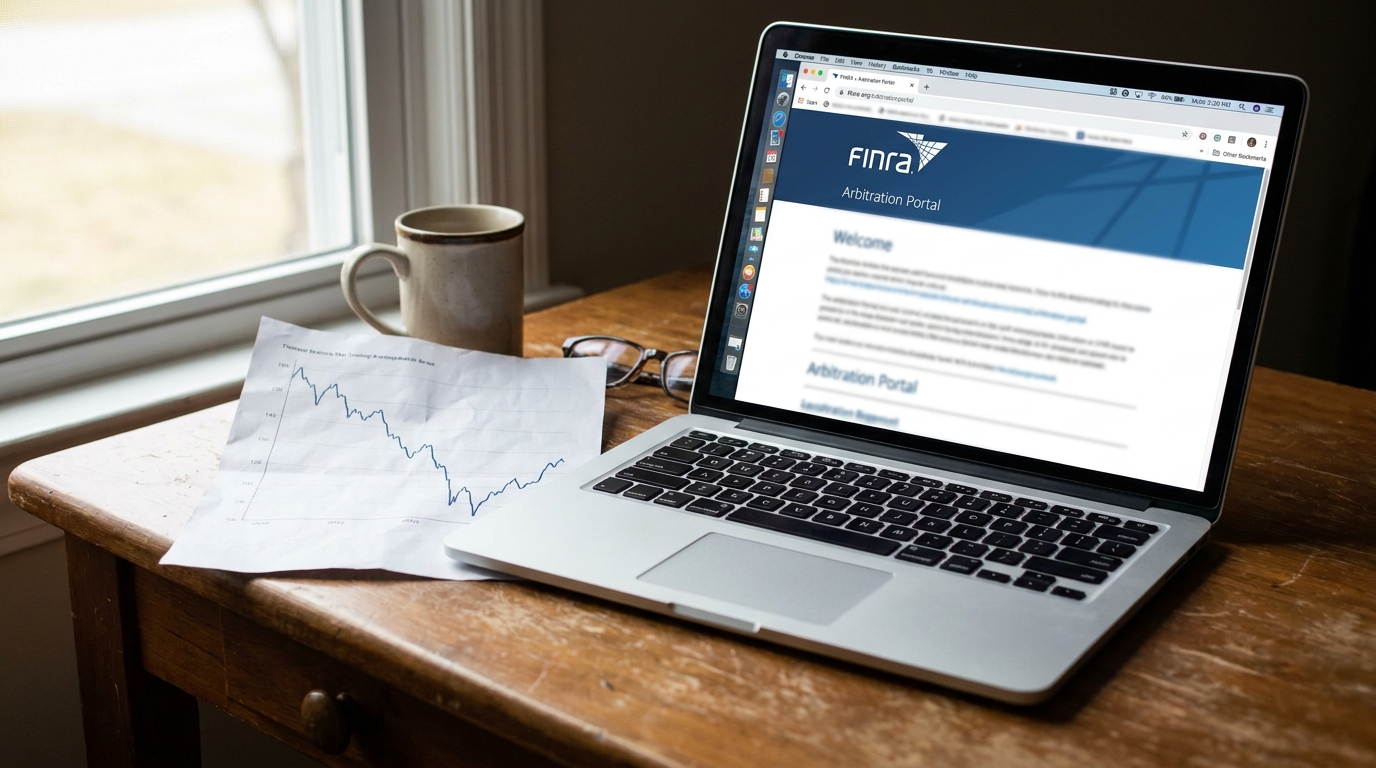
Most investor disputes with brokers proceed through FINRA arbitration rather than traditional litigation. Most customer agreements with a securities broker-dealer include a predispute arbitration clause that requires disputes to be resolved through arbitration rather than in court. Many investors sign these clauses as part of routine brokerage account paperwork without realizing they have agreed to arbitrate future disputes, though FINRA rules do not require customers to enter into such agreements.
FINRA operates the largest arbitration forum in the securities industry, though other forums may also be available. Under FINRA Rule 12200, a dispute must be arbitrated if arbitration is required by a written agreement or requested by the customer, the dispute is between a customer and a member or associated person, and the dispute arises in connection with the member’s business activities. The arbitration panel then makes a decision, which is generally binding and final. While the proceedings themselves are private, FINRA publishes arbitration awards publicly. The process resembles a courtroom trial but with relaxed evidence rules, which can sometimes work in an investor’s favor.
What Claims Can You Bring in New York FINRA Arbitration?
Investors in New York may pursue FINRA arbitration claims for a range of broker misconduct. Common grounds include unsuitability, unauthorized trading, churning, misrepresentations or omissions, improper asset allocation, margin and liquidation losses, and the sale of fraudulent products. Each of these claims requires demonstrating that the broker breached a duty owed to the investor and that the breach caused measurable financial harm.
- Unsuitability: Your broker recommended investments that did not match your risk tolerance, financial goals, or investment timeline.
- Unauthorized trading: Your broker executed trades without your prior knowledge or consent.
- Churning: Your broker engaged in excessive trading primarily to generate commissions.
- Misrepresentation or omission: Your broker provided false information or withheld material facts about an investment.
- Improper asset allocation: Your portfolio was concentrated in ways that exposed you to unreasonable risk.
💡 Pro Tip: Review your brokerage account statements carefully. Unusual trading patterns, unexpected fees, or unfamiliar securities in your account may signal misconduct worth investigating with an attorney experienced in stockbroker misconduct claims.
Breaking Down the FINRA Arbitration Success Rate
The often-cited 84% recovery figure reflects cases resolved through awards, settlements, and other favorable outcomes combined. It is important to understand that this number does not mean 84% of investors receive a full arbitration award. Many cases settle before a panel issues a decision. FINRA mediation, for example, can resolve cases much faster than arbitration, with most mediation cases taking about three months to complete compared to over a year for a typical arbitration case.
Awards vs. Settlements: Key Differences
The distinction between an arbitration award and a settlement matters significantly for recovery. A settlement is a negotiated agreement between the parties, often reached during or before arbitration proceedings. An award is a decision issued by the arbitration panel after a full hearing. Both can result in recovery, but each carries different risks and timelines.
| Arbitration Award | Settlement | |
|---|---|---|
| Decision Maker | FINRA arbitration panel | Parties negotiate directly |
| Timeline | Generally close to a year | Often completes in about three months |
| Binding? | Yes, typically final and binding | Yes, once signed |
| Collection Risk | Higher (unpaid award risk) | Lower (agreed-upon terms) |
| Confidentiality | Awards are publicly available through FINRA | Typically confidential |
💡 Pro Tip: Settlement is not a sign of weakness. In many FINRA cases, a well-negotiated settlement can deliver faster, more certain recovery than waiting for an arbitration panel’s decision.
The Unpaid Award Problem: A Critical Caveat
Winning an arbitration award does not guarantee you will collect the money. According to PIABA, the percentage of unpaid customer awards in FINRA arbitration cases increased to nearly 30% in 2020, up from roughly 27% in 2019. The percentage of unpaid award dollars rose to approximately 24%, up from about 20% the prior year. This problem has persisted for years, with unpaid percentages ranging from 22% to 34% of awards between 2015 and 2020.
The unpaid award problem often stems from respondent firms that close, lack sufficient assets, or allow their FINRA registration to lapse. PIABA has proposed a National Investor Recovery Pool funded by FINRA fines, member assessments, or investor fees to address this issue. FINRA reported that it issued $57 million in fines in 2020, which would have been more than enough to cover unpaid awards that year. As of now, no such fund exists, making broker negligence recovery dependent on the financial condition of the respondent.
💡 Pro Tip: Before filing a claim, an experienced attorney can investigate the respondent broker or firm’s financial condition and registration status. This due diligence helps you assess the realistic likelihood of collecting any award.
How Dodd-Frank Strengthened Stockbroker Negligence New York Protections
The Dodd-Frank Wall Street Reform and Consumer Protection Act significantly expanded the regulatory framework protecting investors. The SEC gained relaxed proof standards in pursuing secondary actors, expanded jurisdiction over foreign cases, the ability to obtain penalty awards in administrative proceedings, and the power to impose industry-wide bars on securities professionals. These investor protection provisions created a stronger regulatory backdrop for investor recovery efforts.
Dodd-Frank also gave the SEC authority to restrict mandatory predispute arbitration agreements in customer contracts, which is directly relevant to how New York FINRA claims and most investor disputes are resolved. Additionally, the Act’s whistleblower provisions under Dodd-Frank Section 922 created financial incentives for individuals to report securities violations to the SEC, which can lead to enforcement actions and indirectly support investor recoveries. These provisions work together to create a more robust enforcement environment for investors pursuing claims.
New York State Protections for Investors
New York investors benefit from both federal and state-level protections. The New York Attorney General’s Investor Protection Bureau handles complaints related to securities fraud, providing a state-level enforcement mechanism that operates alongside FINRA arbitration. While this office focuses on enforcement at the state level, investors pursuing individual recovery generally do so through FINRA arbitration or, in limited cases, through civil litigation.
💡 Pro Tip: Keep all account statements, trade confirmations, correspondence with your broker, and any written investment recommendations. These records are critical evidence in any FINRA arbitration claim and can significantly strengthen your case.
What Affects Your Stockbroker Negligence New York Claim Outcome
Several factors influence whether you will recover losses through FINRA arbitration. The strength of your documentary evidence, the nature and extent of the broker’s misconduct, the size of your losses, and the financial solvency of the respondent all play a role. New York investor arbitration outcomes also depend on the quality of legal representation and how effectively the case is presented to the panel.
Timing matters as well. Under FINRA Rule 12206, no claim is eligible for arbitration if six years have elapsed from the occurrence or event giving rise to the claim. Importantly, this is an eligibility rule, not a statute of limitations, and the arbitration panel determines when the triggering event occurred, which is not necessarily the date of purchase. Applicable state or federal statutes of limitations may impose shorter deadlines for certain claims, so investors should not assume the six-year window is the only relevant deadline. Consulting a FINRA arbitration lawyer as early as possible can help preserve your claim.
💡 Pro Tip: The FINRA arbitration success rate improves when investors act promptly. Delays can result in lost evidence, faded memories of key conversations, and potential eligibility issues.
Frequently Asked Questions
1. Does the 84% FINRA recovery rate mean I will get my money back?
What the recovery statistic actually reflects
Not necessarily. The 84% figure includes settlements, awards, and other resolutions. Your individual outcome depends on factors like the strength of your evidence, the type of misconduct involved, and whether the respondent has assets to pay. Additionally, nearly 30% of arbitration awards went unpaid in 2020, so even a favorable award does not guarantee collection.
2. Can I sue my stockbroker in court instead of going through FINRA arbitration?
Understanding mandatory arbitration clauses
In most cases, no. Most brokerage account agreements contain predispute arbitration clauses that require disputes to be resolved through arbitration rather than a lawsuit. Many investors unknowingly agree to these terms when opening their accounts. However, under FINRA Rule 12200, a customer may request FINRA arbitration even without a written agreement, and FINRA rules do not preclude customers from pursuing relief in court absent such an agreement.
3. How long does a FINRA arbitration case take in New York?
Typical timelines for New York securities arbitration
A typical FINRA arbitration case takes close to a year to reach a decision. However, mediation through FINRA can often result in settlements in about three months. The timeline varies based on case complexity, the number of parties, scheduling, and whether settlement negotiations occur during the process.
4. What types of damages can I recover in a broker negligence case?
Recoverable losses in FINRA proceedings
Investors may seek to recover compensatory damages including out-of-pocket losses, lost profits, and in some cases interest. The arbitration panel evaluates the evidence presented and determines damages based on the specific facts. Measurable, documented losses supported by account records and trading data generally strengthen a damages claim.
Taking the Next Step Toward Recovery
The data shows that the majority of investors who pursue FINRA arbitration claims achieve some form of recovery, but the process requires careful preparation and informed decision-making. Understanding the nuances behind FINRA investor recovery statistics, including the unpaid award problem and the differences between settlements and awards, can help you set realistic expectations. New York investors have access to strong legal protections under both federal and state law, and acting promptly is one of the most important steps you can take.
If stockbroker misconduct has caused you financial losses, Kaplan Rothstein Prüss Peraza, P.A. is ready to help you pursue the recovery you may be entitled to. Call (888) 578-6255 or contact the firm today to get started.