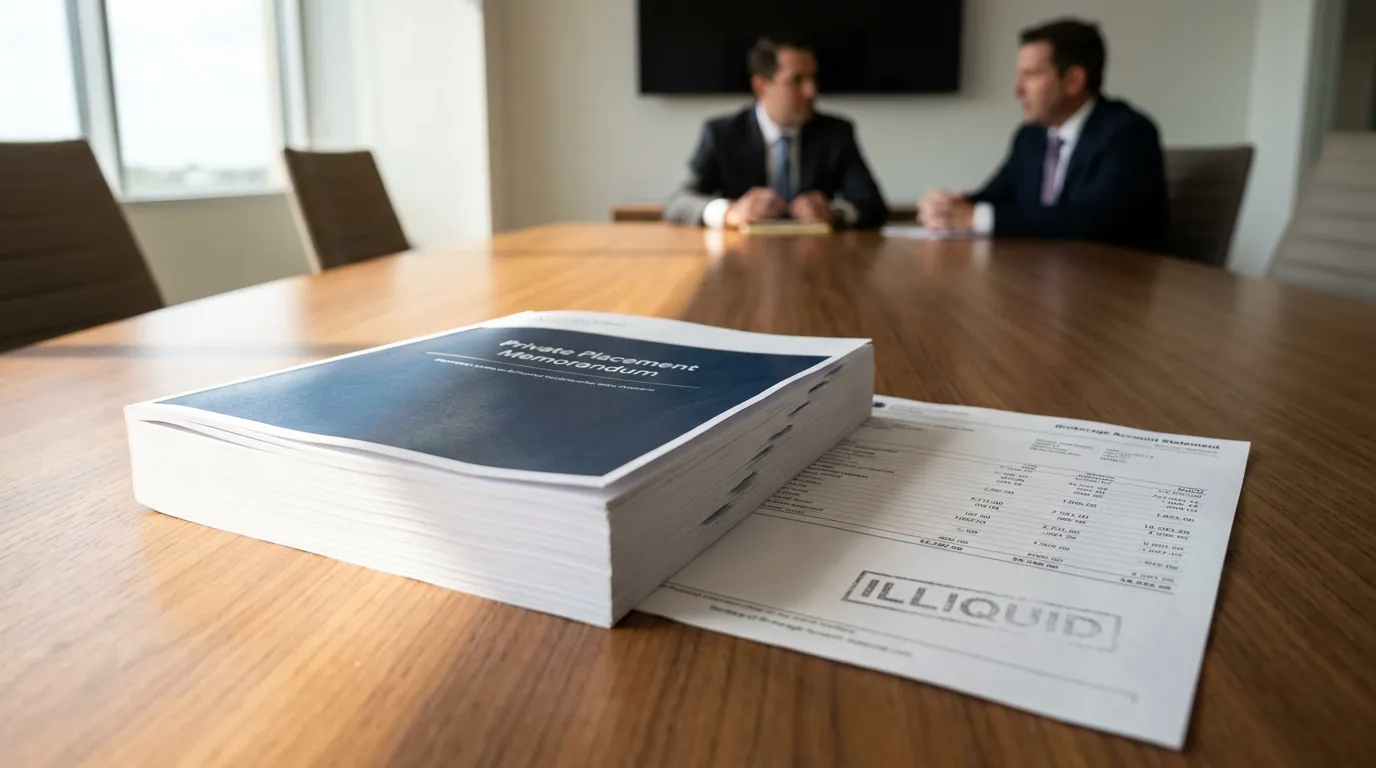
Trapped in a Reg D Deal You Cannot Sell? Here Is What Florida Law Actually Gives You
Florida statute 517.211 rescission damages exist to make defrauded investors whole, but illiquid private placements complicate that promise in ways most retail investors never see coming. When you buy into a Reg D private placement, you often cannot resell it. There is no ready market, no daily price, and sometimes no buyer at all. That single fact changes which remedy Florida law hands you. Florida’s securities remedy statute allows a defrauded investor to elect rescission rather than damages, but the remedy depends on whether they still hold the security.
We understand how disorienting it feels to watch a supposedly safe investment turn illiquid and then worthless. The Miami investment fraud attorneys at Kaplan Rothstein Prüss Peraza, P.A focus on investment fraud and stockbroker misconduct, and we know how time-sensitive these claims can be. If you believe you were sold an unsuitable or misrepresented private placement, call KRP2 now at (888) 578-6255 or reach us through our secure contact page before a hidden deadline quietly closes your window to recover.

What Florida Statute 517.211 Rescission Damages Actually Means
Florida statute 517.211 rescission damages describe the private remedies available to an investor who was sold a security in an unlawful sale. Under Florida Statute 517.211, an investor who bought a security in an unlawful sale can either rescind (if they still own it) or recover damages (if they have sold it). With illiquid private placements you often cannot sell, so you are channeled into rescission.
The statute is the controlling authority for any Florida rescission analysis. Florida’s securities rescission remedy is codified in Chapter 517, section 517.211, which authorizes purchasers to rescind unlawful securities sales. The text of Florida Statute 517.211 provides that every sale made in violation of either s. 517.07 or s. 517.12 may be rescinded at the election of the purchaser.
Rescission damages valuation sounds technical, but the core idea is simple. Rescission unwinds the deal and puts you back where you started, while damages measure what you lost after selling. The difficulty with illiquid holdings is that both paths assume the security has a value you can pin down.
Rescission vs. Damages: Why Ownership Decides Everything
Whether you still own the security is the single fork that controls your remedy under the statute. The statute conditions the form of relief on continued ownership: an investor who still holds the security may seek rescission, while an investor who has sold it is limited to damages. For a deeper look at how Florida courts handle these formulas, the Florida Bar Journal analysis on calculating statutory rescission damages walks through the math that most firm pages skip.
If You Still Hold the Security: Rescission and Tender
If you still own the position, rescission is your path, and it runs through tender. Rescission under Chapter 517 operates through a tender mechanism, where the purchaser recovers the consideration paid plus legal-rate interest, less income received, upon tendering the security back. You hand the security back and demand your money returned with interest, minus any distributions you already collected. The problem is obvious: tender presumes the security can be handed back and valued.
If You Already Sold It: The Damages Formula
If you managed to sell, the statute switches you to a damages calculation instead. For an investor who has sold the security, damages equal the difference between the amount paid and the amount received on sale, plus interest, less income received. That formula works when a real sale price exists. With private placements, though, many investors never find a buyer, so rescission becomes the only realistic option.
Why Illiquid Private Placements Break the Standard Playbook
Illiquid private placements break the standard 517.211 playbook because the remedy assumes a marketplace that does not exist here. Reg D offerings are typically restricted, thinly traded, or entirely non-transferable. When there is no market price, both the "sale amount" and the deductible "income received" become fighting points.
Investor recovery in illiquid situations often turns on valuation battles rather than simple arithmetic. Illiquid private placements complicate this because there is often no market price to establish a sale amount. Reg D rescission in Florida therefore demands careful proof of what you paid, what you received, and what the frozen interest is arguably worth.
Here are the friction points that most commonly derail illiquid-placement claims:
- No public market to set a clean sale price or current value.
- Transfer restrictions that make literal tender awkward or contested.
- Disputed "income received," since distributions may have been return of capital, not true income.
- Issuer insolvency, where the sponsor entity has no assets left to refund.
The 30-Day Trap Every Private Placement Investor Must Know
A short, easily missed deadline can quietly extinguish your rescission rights. The statute contains a 30-day rejected-offer bar, meaning an investor loses the benefit of the rescission remedy if, within 30 days after receipt, they refuse or fail to accept a written offer by the seller to take back the security and refund the full amount paid, with interest. This creates a strategic trap: you must promptly evaluate rescission offers even though valuing the illiquid position and the deductible income received is difficult.
Time pressure and valuation uncertainty are a dangerous combination. You may receive a written buy-back offer that looks reasonable but shortchanges you, and the clock starts running on receipt. If an offer lands in your inbox, treat it as urgent and get it reviewed before the 30-day window closes.
💡 Pro Tip: Keep every subscription agreement, distribution notice, and written communication from the sponsor in one folder. In illiquid-placement disputes, the paper trail often decides how "consideration paid" and "income received" get calculated.
Who You Can Hold Liable: Recovery Beyond the Issuer
When the issuer is broke, Florida law lets you reach the people who helped sell the deal. Every director, officer, partner, or agent of the seller who personally participated or aided in making the sale is jointly and severally liable to the purchaser. This is significant in private placement disputes where sponsors, placement agents, and principals may all be named to improve an investor’s odds of recovering when the illiquid issuer itself lacks assets.
This broad liability pool is central to real-world florida securities fraud recoveries. KRP2 has filed FINRA arbitration claims and lawsuits on behalf of hundreds of Medical Capital, Provident, Shale Royalties, DBSI, and Striker investors, exactly the kind of illiquid, high-risk placements this statute was built to address. You can review related private-placement and securities litigation coverage on our investment fraud blog for context on how these cases develop.
How a Miami Securities Attorney Values and Pursues an Illiquid-Placement Claim
A Miami securities attorney approaches an illiquid-placement claim by building the valuation record first, then pursuing every liable party. Because there is no ticker price, a Miami investment attorney generally reconstructs value from subscription documents, offering materials, distribution history, and expert analysis. The goal is to establish the consideration you paid and to challenge inflated "income received" deductions that shrink your net recovery.
KRP2 pairs boutique focus with big-firm pedigree. Our attorneys have worked for some of the country’s largest and most prestigious law firms and now devote that experience to representing wronged investors. The firm has recovered $200M+ for clients across FINRA arbitration and all levels of state and federal court, giving KRP2 a proven track record in securities litigation in Florida.
Frequently Asked Questions
Can I rescind an illiquid private placement in Florida if I cannot sell it? Yes. The statute distinguishes the remedy based on whether the plaintiff still owns the security, meaning an investor holding an illiquid private placement they cannot sell is channeled toward rescission and tender rather than damages.
What is the difference between rescission and damages under 517.211? Ownership decides. Section 517.211 distinguishes between purchasers who still own the security, who pursue rescission, and those who have sold it, who pursue damages.
Who can be sued besides the company that sold the private placement? Liability extends beyond the seller to directors, officers, partners, and agents who personally participated in or aided the sale. That can include sponsors, placement agents, and principals.
Is there a deadline that could kill my rescission claim? Yes, and it is short. An investor loses the benefit of the rescission remedy by failing, within 30 days after receipt, to accept a written offer by the seller to take back the security and refund the full amount paid, with interest.
Are there other legal theories if rescission is impractical? Often, yes. Chapter 517 makes its remedies cumulative and preserves other statutory and common-law rights and remedies for Florida securities claimants, giving plaintiffs alternative theories where rescission is impractical.
Your Losses Are Not the End of the Story
Florida statute 517.211 rescission damages give illiquid private placement investors a real, statute-backed path to recovery, but only if you act before the deadlines and valuation problems work against you. The rescission-versus-damages fork, the tender requirement, and the 30-day rejected-offer bar all hit illiquid Reg D investors harder than anyone else. The good news is that joint-and-several liability lets you pursue the sponsors and agents behind the deal even when the issuer itself is insolvent.
Do not let a frozen investment and a ticking clock decide your outcome for you. KRP2 will aggressively pursue claims to recover your investment losses. Take action today by reaching out through the Kaplan Rothstein Prüss Peraza, P.A homepage and put a seasoned plaintiff-side team to work on your illiquid-placement claim.