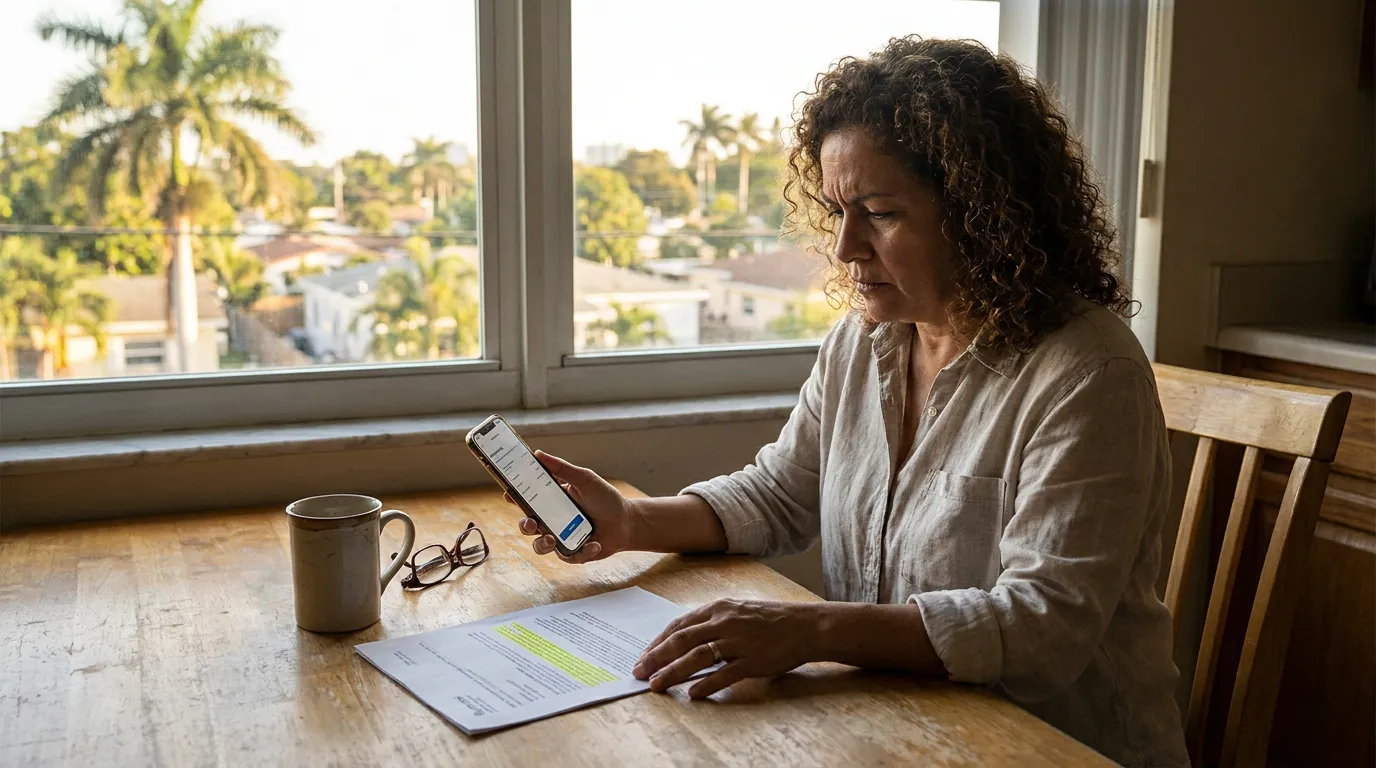
Understanding Your Right to Recover After a Crypto Hack in Miami
Under 18 usc 2707 statutory damages rules, a crypto victim may not automatically need to prove actual dollar losses to recover. The Stored Communications Act sets a $1,000 statutory damages floor for qualifying violations. However, federal courts are split: some require proof of actual damages before you can recover, while others award the $1,000 minimum without proof of loss. That single question often decides whether a claim survives an early challenge.
If your exchange account was drained, you should not have to guess about your rights. Kaplan Rothstein Prüss Peraza, P.A ("KRP2") aggressively pursues claims to recover funds lost to a hacked crypto account. Call us at (888) 578-6255 or reach our team through the KRP2 contact page to discuss your options. Our attorneys have recovered over $200M in assets lost to investment fraud, stockbroker misconduct, and related misconduct, and we bring that same intensity to crypto theft cases.
The strategy behind a strong claim starts with understanding both federal and Florida law. Victims of a compromised Coinbase or exchange account often explore negligence, breach of contract, and data-privacy theories. You can learn more on our 18 usc 2707 statutory damages lawyer practice page. Below, we explain how the actual-damages question works for a Florida plaintiff.
What Is an 18 U.S.C. § 2707 Statutory Claim?
An 18 U.S.C. § 2707 claim is the private civil remedy inside the Stored Communications Act. The broader statute, 18 U.S.C. §§ 2701 through 2712, prohibits intentionally accessing stored electronic communications held by a covered provider without authorization. Where it applies, § 2707 allows you to sue the violator directly in federal court.
This is where the 18 usc 2707 statutory damages framework becomes important for crypto victims. An SCA claim requires that unauthorized access be knowing or intentional, not accidental. The remedy can include actual damages plus any profits the violator made, but no less than $1,000. If the violation is willful or intentional, a court may also assess punitive damages, and a prevailing plaintiff may recover costs and reasonable attorney fees.
Most competing articles frame the SCA around email snooping, but the same private right of action may reach a crypto hack. When an attacker breaks into stored account data of a covered service, the statutory structure could apply, though courts have not broadly tested this theory in the crypto context.
The Actual Damages Question: Do You Have to Prove a Dollar Loss?
The 18 USC 2707 actual damages requirement is genuinely unsettled. The statute lists a minimum recovery, yet courts disagree about whether you must first prove real financial harm to unlock it. Understanding both views is the difference between a claim that advances and one dismissed early.
The $1,000 Statutory Damages Floor
Section 2707(c) creates a statutory damages floor that no qualifying recovery may fall below. The text provides that a person entitled to recover shall receive no less than $1,000. That floor protects victims whose exact losses are difficult to calculate, which is common when stolen crypto fluctuates wildly in value.
Where Courts Disagree
Federal courts have not settled whether that floor applies without proof of actual damages. Some decisions require actual damages before any statutory recovery. In Van Alstyne v. Electronic Scriptorium (4th Cir. 2009), the court held that a plaintiff must prove actual damages to recover the SCA’s statutory damages, though it allowed punitive damages and attorney’s fees without such proof. Seale v. Peacock (10th Cir. 2022) also addressed this requirement. By contrast, other courts have taken the view that a plaintiff could be entitled to the $1,000 minimum even without showing actual harm, as reflected in Maremont (N.D. Ill. 2014).
Because Florida sits in the Eleventh Circuit, the controlling answer can be fact-dependent and evolving. Outcomes depend on specific facts, pleadings, and how a court reads the statutory text. That uncertainty is not a reason to hesitate; it is a reason to have an experienced advocate frame your claim to withstand challenge.
💡 Pro Tip: The way your complaint pleads both actual and statutory damages can influence whether a claim survives a motion to dismiss or summary judgment, so this framing decision should be made early with counsel.
How This Plays Out for a Miami Crypto Victim
Miami crypto victims often have a second, parallel path under Florida law. Florida’s civil theft framework can run alongside a federal SCA claim, giving you more than one route to damages recovery.
Florida’s Civil Theft Statute as a Parallel Track
Florida’s civil theft statute provides a powerful statutory-damages alternative for hacked-account victims. Under Florida’s civil theft statute, Fla. Stat. § 772.11, a claimant who proves theft by clear and convincing evidence has a cause of action for threefold the actual damages sustained, with minimum damages of $200 plus reasonable attorney’s fees and court costs. That structure means a plaintiff who cannot easily quantify losses may still recover a baseline plus fees. It carries real hurdles, including a heightened clear-and-convincing standard and a mandatory written pre-suit demand.
The related theft-of-communications provisions add a device-based statutory election. Provisions within Florida Statutes Chapter 812 allow an aggrieved party, before final judgment, to elect statutory damages of not less than $250 or more than $10,000 for each communications device involved, as the court considers just. For willful violations committed for commercial advantage or financial gain, a court may increase damages by up to $50,000 per device, while an unknowing violator’s floor may be reduced to not less than $100. These provisions can also support injunctions, impoundment, and other equitable relief.
| Track | Minimum Recovery | Key Feature |
|---|---|---|
| Federal § 2707 | $1,000 floor | Actual-damages split; fees available |
| Fla. § 772.11 | $200 + treble actual damages | Clear-and-convincing proof; pre-suit demand |
| Fla. § 812.15 election | $250 to $10,000 per device | Up to $50,000 per device for willful gain |
What You Must Still Prove to Win
A statutory floor does not erase your burden of proof. For a federal claim, you must show unauthorized access to stored data on a covered facility undertaken with a knowing or intentional state of mind. You also need to connect that access to your loss through a clear chain of causation.
Timing is a critical part of any statutory claim. Section 2707 sets a two-year limitations period, running from the date the claimant first discovered or had a reasonable opportunity to discover the violation. Courts read discovery-based accrual narrowly, so you should not assume additional time applies without case-specific review.
Litigation carries risk, and a candid advocate names it. Under the Florida civil theft statute, punitive damages may not be awarded, and a prevailing defendant may recover fees where a claim lacked substantial fact or legal support. Well-resourced exchanges will press these points hard, which is exactly why a boutique firm prepared to fight larger adversaries can matter to your outcome.
Evidence That Strengthens Your Claim
Strong evidence is what turns a statutory theory into a recoverable claim. The more clearly you can document what happened and when, the better positioned you are on both the actual-damages and statutory tracks. Preservation should begin as soon as you notice a problem.
- Transaction and withdrawal records showing the unauthorized transfers and timestamps.
- Login and device access logs from your exchange account that reflect the intrusion.
- Communications and notices from the platform about the suspicious activity.
- Screenshots and account statements documenting balances before and after the theft.
Preserving these records early can make or break the causation and damages elements. For a deeper walkthrough of building a civil file after an account takeover, see our guide on building a civil case after an attack. Keep everything in its original form and avoid altering files, since integrity of the evidence matters to a court.
💡 Pro Tip: Save data in its native format and note the dates you first discovered the breach, because that discovery date can directly affect your limitations analysis.
Frequently Asked Questions
Do I have to prove I lost money to sue under 18 U.S.C. § 2707? Not necessarily. The statute sets a $1,000 floor, but the 18 USC 2707 actual damages requirement is unsettled, some courts require proof of actual harm while others do not. A case-specific review is important.
How much can a Miami crypto victim recover under the statutory damages floor? Federal law provides no less than $1,000 for a qualifying SCA violation, subject to the actual-damages split. Under Florida law, § 772.11 provides a $200 minimum plus treble actual damages, and § 812.15 allows a per-device statutory election between $250 and $10,000.
How long do I have to file a § 2707 claim? The federal claim carries a two-year limitations period from when you first discovered or had a reasonable opportunity to discover the violation. Courts interpret discovery-based accrual narrowly.
Is 18 U.S.C. § 2707 a federal or state claim, and how does Florida law fit in? Section 2707 is a federal claim under the Stored Communications Act. In Florida, it may run parallel to a state civil-theft claim under §§ 772.11 and 812.15, giving Miami victims more than one path to recovery.
What if my losses are hard to value in dollars? Statutory floors exist precisely for that situation. Both the federal minimum and Florida’s statutory-damages election can support recovery even when actual losses are difficult to fix, subject to the applicable proof standards and the federal actual-damages split.
Bringing the Federal and Florida Frameworks Together
The bottom line is that 18 usc 2707 statutory damages may be available to Miami crypto victims without proof of a precise dollar loss, though the law remains split. The Stored Communications Act sets a $1,000 floor, Florida’s civil theft statute adds a parallel track with its own minimums and treble damages, and each path carries distinct proof burdens and deadlines. Presenting these honestly, while framing your strongest theory, is what separates a resilient claim from one that stalls early. KRP2 serves clients from offices including Miami, New York, Los Angeles, and West Palm Beach, combining local knowledge with national reach.
You are not alone, and the sooner you act, the better your chance of recovery. Time limits and evidence preservation matter, so do not wait to protect your position. Learn more and take the next step with Kaplan Rothstein Prüss Peraza, P.A today.