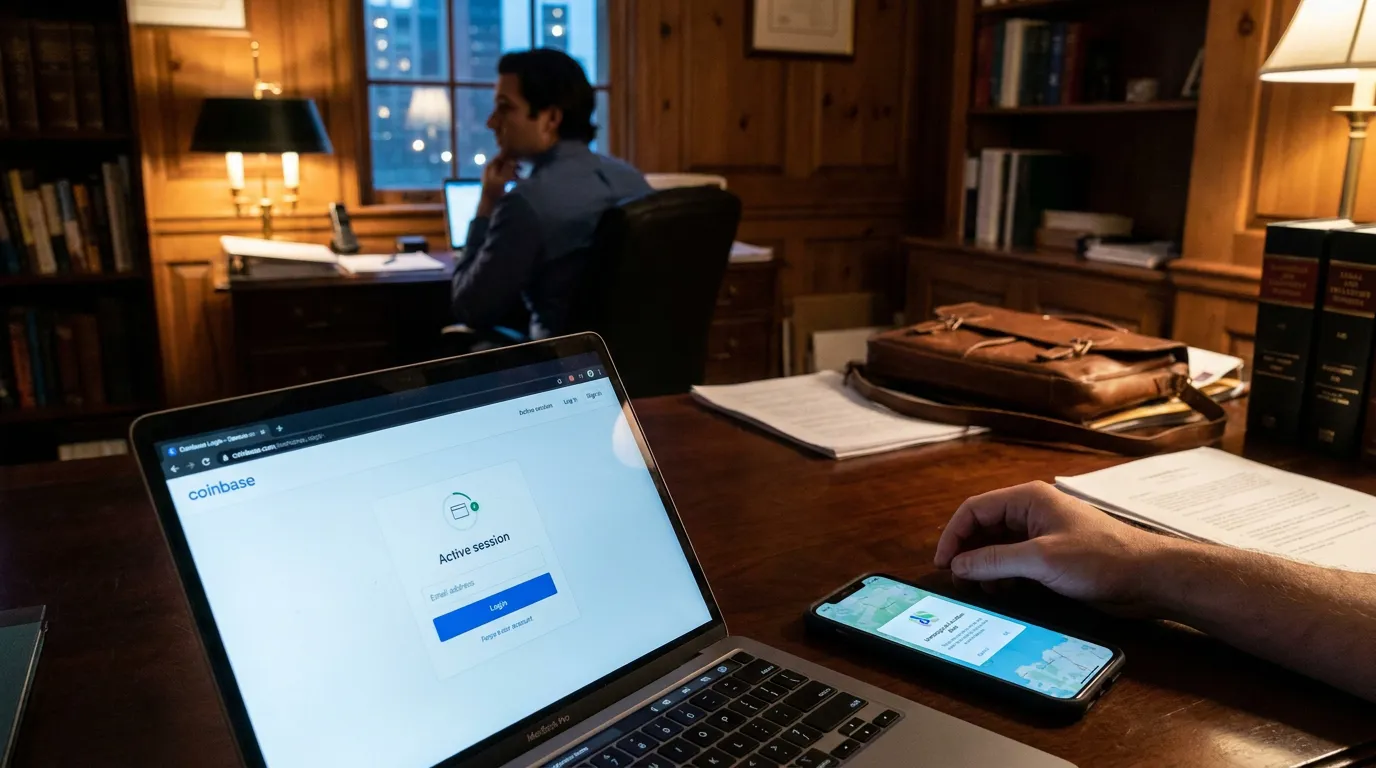
Understanding How a Coinbase Account Hacked Through Session Tokens Happens
Key Takeaways: Session token hijacking occurs when an attacker steals the authentication token your browser uses to maintain your Coinbase login, enabling them to impersonate your verified session and drain funds without your password. Because the session is already authenticated, this can bypass two-factor authentication, making it especially dangerous for Miami investors. Attackers capture tokens through infostealer malware, malicious browser extensions, fake login portals, or compromised devices. The Florida Computer Crimes Act (Fla. Stat. § 815.06) covers unauthorized access and felony-level fraud schemes, while Chapter 817 treats stolen tokens as access devices and personal identification information. Victims may pursue civil recovery for compensatory damages under Fla. Stat. § 815.06(5)(a), which requires conviction of the offender, and may explore negligence or breach-of-contract claims against the exchange. Preserving evidence such as login alerts, transaction records, wallet addresses, and device forensics is essential to any recovery effort.
Session token hijacking is a sophisticated attack in which a threat actor steals the authentication data your browser uses to stay logged in to your Coinbase account. When you sign in, Coinbase issues a session token that tells its servers you have verified your identity. If an attacker captures that token through malware, a malicious browser extension, or a phishing page, they can impersonate your authenticated session and access your funds without needing your password. Because the session is already verified, this Coinbase session cookie attack can bypass two-factor authentication, making it especially dangerous for Miami investors holding significant cryptocurrency.
If your Coinbase account hacked event involved a stolen session token, the team at Kaplan Rothstein Prüss Peraza, P.A is ready to help you evaluate your options. Call our office at (888) 578-6255 or reach out through our secure contact page to discuss preserving evidence and pursuing recovery.

How a Coinbase Session Cookie Attack Actually Works
A session token functions like a temporary digital key that keeps you logged in without re-entering credentials on every page. Attackers specializing in token theft crypto account Florida schemes deploy infostealer malware, fake login portals, or compromised devices to intercept this key while active. Once captured, the token is injected into the attacker’s browser, granting them an authenticated session mirroring yours.
The most alarming feature is its ability to sidestep trusted security controls. A Coinbase hack bypass 2FA Miami scenario is possible because the stolen token represents a session that already cleared two-factor verification. The platform sees a valid, authenticated request and may not flag it as suspicious until funds are moving.
💡 Pro Tip: Logging out of Coinbase fully when you finish a session, rather than closing the tab, invalidates the active token and reduces the attacker’s exploitation window.
Why a Coinbase Account Takeover Miami Investors Face May Be Unlawful Access
Florida treats unauthorized account access as a serious legal wrong, and session token hijacking fits squarely within that framework. Under the Florida Computer Crimes Act, a person commits an offense when willfully, knowingly, and without authorization accessing any computer system or electronic device, as set out in Fla. Stat. § 815.06(2)(a). A hijacker who injects your stolen token to enter your Coinbase account is accessing a system without authorization, even bypassing the login screen entirely.
The statute also addresses situations where victims are locked out after a takeover. Fla. Stat. § 815.06(2)(b) prohibits disrupting or denying an authorized user’s ability to transmit data to or from a computer network. Review the full text of the Florida Computer Crimes Act to see how broadly these provisions are written. When an attacker changes your password and severs your access during hijacking, that conduct may implicate this provision.
Florida law elevates the seriousness when access is tied to a financial scheme. Under Fla. Stat. § 815.06(3)(b), unauthorized access becomes a second-degree felony when committed to devise or execute any scheme to defraud or obtain property. Draining cryptocurrency from a hijacked account fits this description, underscoring how Florida views cryptocurrency exploit Florida residents suffer.
The Civil Recovery Path After Token Theft
Beyond public enforcement, Florida law gives victims a private route to seek compensation. Fla. Stat. § 815.06(5)(a) allows the owner of a computer system to bring civil action against a person convicted under the statute for compensatory damages. Because this statutory remedy is tied to a conviction, it depends on successful criminal prosecution, though it focuses on making the victim whole rather than punishing the offender.
Civil claims often extend beyond the individual attacker to the platform itself. Many Miami investors experiencing a crypto security breach Miami event explore claims grounded in negligence, breach of contract, or data-privacy theories against the exchange. These claims turn on whether the platform failed to implement reasonable security measures or breached promises in its user agreement, with outcomes depending on specific facts, including limitation-of-liability or arbitration terms.
Establishing clear causation is central to any civil recovery effort. You must show unauthorized access occurred, that it caused identifiable losses, and that a responsible party bears legal liability. Our discussion of a recent Coinbase theft suit illustrates how courts are weighing exchange negligence questions in cryptocurrency disputes.
💡 Pro Tip: Preserve everything immediately after suspected hijacking. Screenshots of unfamiliar logins, transaction emails, and device logs can become important evidence in civil claims.
How Florida Treats Stolen Tokens as Access Devices
Florida’s identity-theft framework adds another layer of legal context for hijacking victims. Under Fla. Stat. § 817.568(1)(a), an "access device" includes any card, code, account number, or other means of account access that can obtain money, goods, services, or anything of value. A Coinbase session token functions as an access device because it grants the bearer account entry and access to holdings.
The same chapter recognizes how monetary losses escalate conduct severity. Florida’s statutory scheme ties penalties to fraud value, and you can read broader provisions in Chapter 817 on fraudulent practices. While these enforcement details sit on the public side, they illustrate why documenting your loss’s full dollar value matters when evaluating civil options.
A stolen token may also qualify as personal identification information under Florida law. Fla. Stat. § 817.568(1)(f) extends the definition to information that can access a person’s financial resources, which can describe a Coinbase token. This statutory treatment reinforces that session hijacking is recognized unlawful conduct rather than a gray area.
| Legal Concept | Governing Authority | Relevance to Session Hijacking |
|---|---|---|
| Unauthorized access | Fla. Stat. § 815.06(2)(a) | Covers entering an account with a stolen token |
| Access disruption | Fla. Stat. § 815.06(2)(b) | Applies when victims are locked out |
| Civil compensatory damages | Fla. Stat. § 815.06(5)(a) | Lets victims sue a convicted offender for losses |
| Access device definition | Fla. Stat. § 817.568(1)(a) | Treats a token as a means of account access |
Practical Steps to Strengthen a Crypto Account Hacking Miami Florida Claim
Acting quickly and methodically can significantly affect your recovery ability after advanced crypto hacking Florida incidents. Documentation is the foundation of any civil case, and earlier action means more complete records. Below are general practices many crypto hacking victims find useful.
- Save all Coinbase notification emails, including login alerts and withdrawal confirmations.
- Record wallet addresses where your cryptocurrency was transferred, since blockchain records support tracing.
- Keep a timeline of when you noticed unusual activity and steps taken.
- Avoid altering or wiping suspected compromised devices, as they may hold forensic evidence.
Working with counsel experienced in crypto loss matters helps you understand how facts fit together. A firm handling digital-asset disputes can assess whether platform conduct or third-party actions support a claim. For investors researching options, our overview of Coinbase cryptocurrency theft explains how recovery efforts are structured.
💡 Pro Tip: Cryptocurrency moves quickly, but blockchain transactions are permanent and public. Even if funds have left your account, the transaction trail often remains traceable, supporting recovery analysis.
Frequently Asked Questions
1. Can a hijacker really access my account without my password?
Yes, in many cases. A stolen session token represents an already-authenticated session, so an attacker injecting it into their browser may not need your password or 2FA code. This is why session token hijacking Coinbase incidents are difficult to detect until losses appear.
2. Is session hijacking treated differently from password theft under Florida law?
The legal analysis is often similar, because both involve unauthorized access. Fla. Stat. § 815.06(2)(a) focuses on accessing a system without authorization regardless of method. Whether the attacker stole a password or token, the access itself can be unlawful under the statute.
3. Do I have a civil claim if my funds are already gone?
Potentially, yes, though outcomes depend on facts. Fla. Stat. § 815.06(5)(a) authorizes compensatory damages against a person convicted under the statute, meaning that remedy hinges on criminal conviction, while separate theories may apply to a platform. A session hijacking attorney Miami investors trust can evaluate whether a viable claim exists in your situation.
4. How long do I have to bring a claim?
Florida applies civil statutes of limitations that vary by claim type. Courts generally interpret tolling and discovery exceptions narrowly, so deadlines should never be assumed to extend automatically. Because timing is fact-sensitive, seek guidance promptly.
5. What evidence matters most in these cases?
Digital records carry the greatest weight. Login histories, transaction logs, device forensics, and blockchain tracing data help establish unauthorized access and causation. Preserving this material early strengthens any recovery effort.
Protecting Your Rights After a Crypto Security Breach
Session token hijacking represents one of the more technically advanced threats facing cryptocurrency investors today, but Florida law provides meaningful avenues for victims. Between the unauthorized-access provisions of the Florida Computer Crimes Act, the access-device definitions in Chapter 817, and the civil remedy available against a convicted offender, investors who suffer hijacking are not without options. The right strategy depends on careful evidence preservation, accurate loss documentation, and clear understanding of how these statutes apply to your circumstances.
If your Coinbase account hacked situation has left you facing significant cryptocurrency losses, the attorneys at Kaplan Rothstein Prüss Peraza, P.A are prepared to help you understand your path forward. Call our team at (888) 578-6255 or message us through our online contact form to discuss protecting your rights and pursuing recovery.