Why Timely Document Exchange Shapes the Strength of Your Investment Loss Claim
Key Takeaways: In FINRA arbitration, the 60-day document production period generally runs from the date the answer is due, during which parties are expected to exchange the categories of records listed in FINRA’s Discovery Guide, without motions or arbitrator orders. This deadline comes from FINRA’s Code of Arbitration Procedure, Rules 12505 through 12513, not Florida statutes, and generally applies nationwide. Investors typically receive account statements, new account forms, correspondence, internal emails, supervisory and compliance reviews, exception reports, and due diligence materials, to the extent those categories apply. The 60-day figure describes a general production period rather than a guarantee, and partial productions, objections, and good-cause extensions are common. When a firm falls short, the Code provides an enforcement path, including motions to compel under Rule 12509 and discretionary sanctions under Rule 12511, though panels may respond best to a documented meet-and-confer history. Because these documents can influence whether unsuitability, churning, or unauthorized trading may be proven, knowing which categories should have appeared can matter when pressing a thin production.
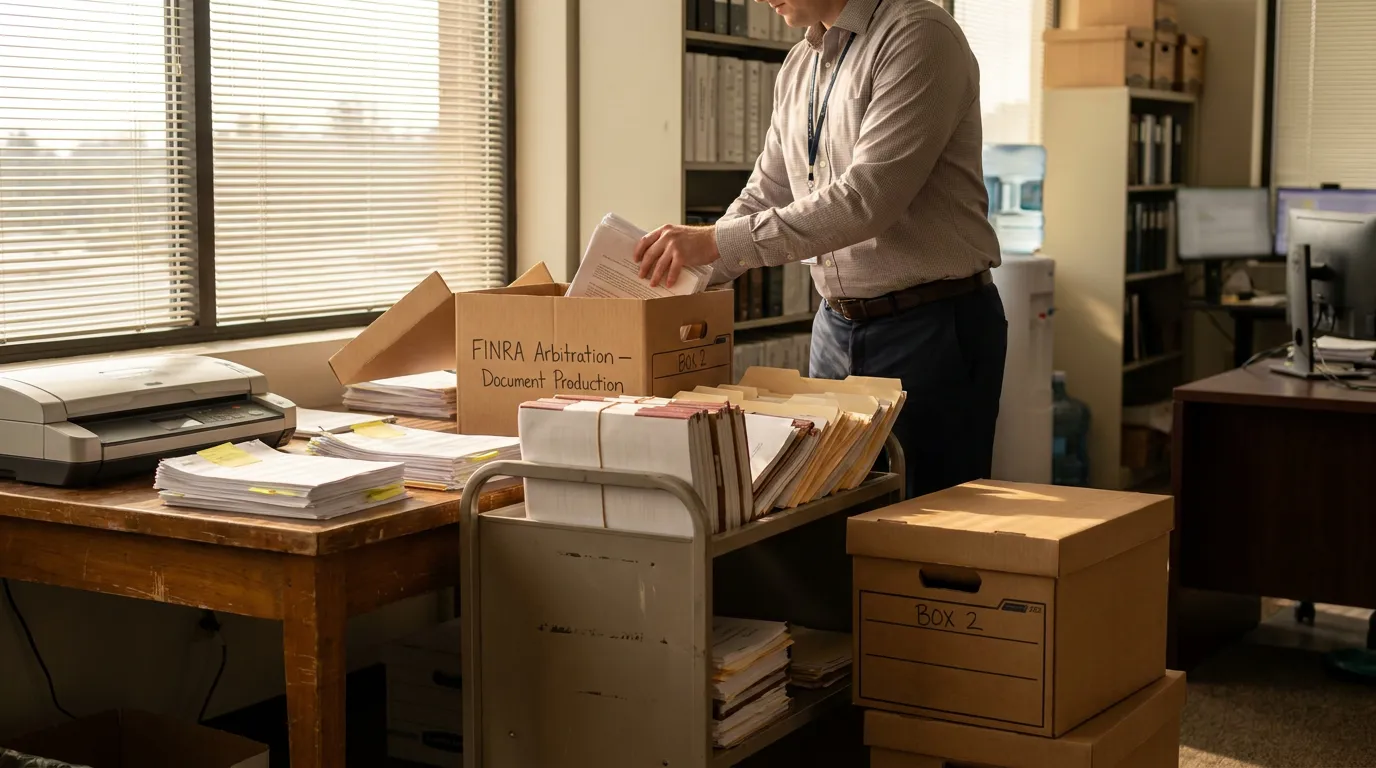
In FINRA arbitration, the widely referenced 60-day document production period reflects the expectation that parties will exchange the categories of records identified in FINRA’s Discovery Guide within 60 days of the date the answer is due, without waiting for a hearing or arbitrator’s order. For an investor who lost money because of unsuitable recommendations, unauthorized trades, or excessive trading, this early exchange is often where the case is built. Account statements, new account forms, suitability notes, internal emails, and supervisory records generally arrive during this window and may reveal what the brokerage firm knew and when. Missing or incomplete productions can slow a case considerably, though arbitrators generally retain authority to address noncompliance under the Code.
If you are preparing a claim or already navigating discovery, the team at Kaplan Rothstein Prüss Peraza, P.A can help you evaluate what records the firm should be producing. Call (888) 578-6255 or contact us now to discuss your situation with counsel who handles investor claims nationwide, including matters connected to Miami, Florida.
The Rules That Create the FINRA Discovery Guide Document Production Framework
FINRA’s discovery rules, rather than Florida statutes, generally govern what may be produced in a securities arbitration. The discovery provisions of the Code of Arbitration Procedure, Rules 12505 through 12513 for customer disputes, establish the framework parties and arbitrators use to request documents, object, and set deadlines. FINRA Rule 12506 addresses document production in customer cases, including timing for items on the Document Production Lists, while Rule 12507 governs additional requests for materials outside those Lists. Rule 13506 is the parallel provision in the Code for Industry Disputes, applying to arbitrations between firms and associated persons rather than customer claims.
These rules generally apply nationwide. Because FINRA is a national self-regulatory organization rather than a state agency, similar production obligations typically attach whether the arbitration is heard in Miami, West Palm Beach, Los Angeles, or New York. Florida law contains arbitration frameworks with tiered deadlines in unrelated regulatory settings, but those provisions generally do not supply authority for FINRA discovery timing, a distinction that matters when investors encounter general Florida arbitration articles not addressing brokerage disputes.
How the Discovery Guide and Document Production Lists Work
The Discovery Guide identifies categories of documents presumed discoverable in customer arbitrations. Rather than requiring investors to draft requests from scratch, the Document Production Lists set out standard categories tied to common claims, which parties are generally expected to exchange as a matter of course, subject to objections that a category is irrelevant, unduly burdensome, or inapplicable. This structure traces back to NASD Notice to Members 99-90, which announced the standardized Discovery Guide and described the listed materials as presumptively discoverable in customer disputes (not industry disputes, as the Document Production Lists did not apply to industry arbitrations).
That history explains why formal motion practice is often the exception, not the starting point. The presumption of production was designed so parties would not generally need to file motions to obtain routine account and supervisory records. Later codification in the Code added defined response and objection periods, producing the discovery practice investors may encounter today.
What Investors Typically Receive During the Production Window
Most investor-side productions center on records the firm already maintains in the ordinary course of business. While every case differs, and applicable categories depend on the claims asserted, commonly exchanged categories may include:
- Monthly account statements, confirmations, and new account documentation
- Correspondence between the investor and the registered representative
- Internal firm emails, notes, and supervisory or compliance reviews
- Exception reports, complaint files, and branch audit materials
- Documents reflecting due diligence on the product at issue
💡 Pro Tip: Preserve your own copies of statements, texts, and emails before requesting anything. Your records can help establish the timeline that makes gaps in the brokerage firm’s response visible to the panel.
Reading the Document Production Timeline Realistically
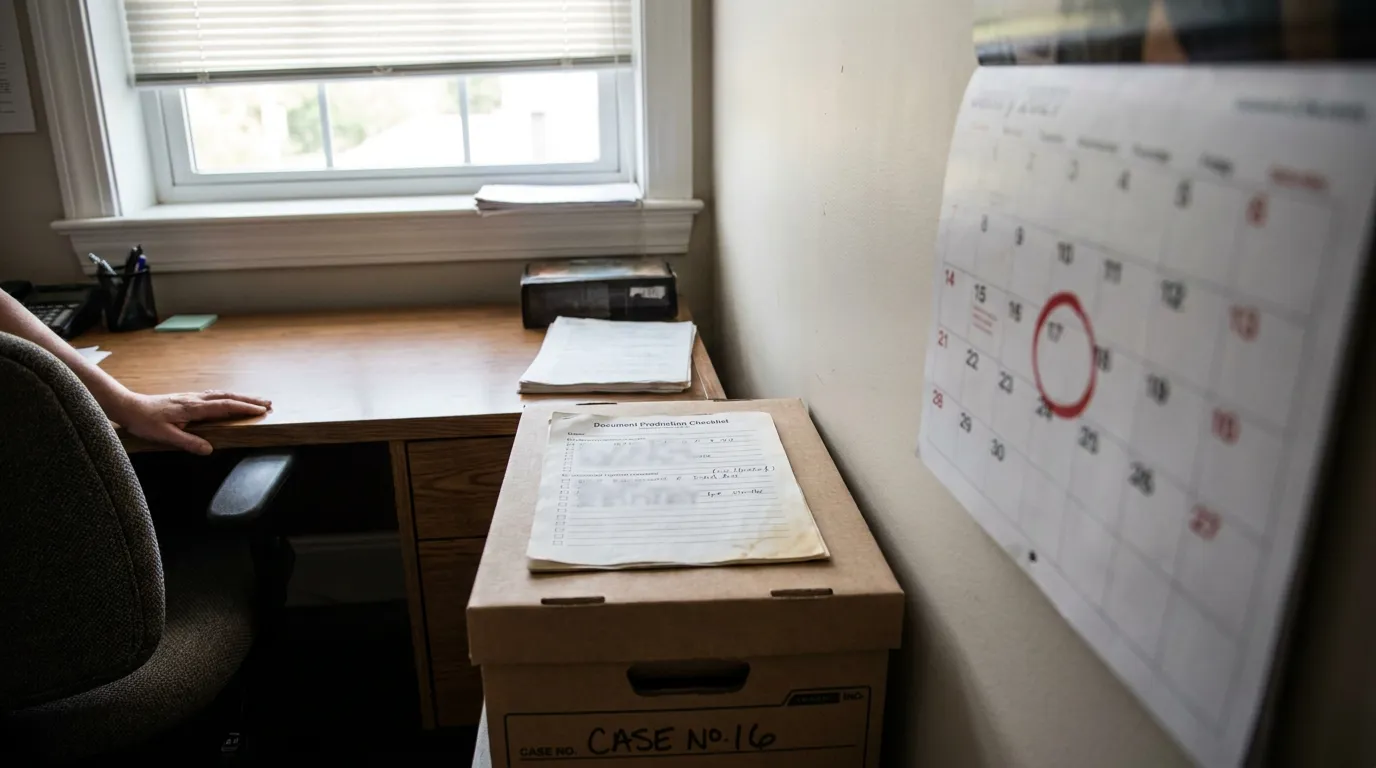
The 60-day figure describes the general production period, not a guarantee of complete disclosure. Under FINRA’s rules, discovery is meant to be cooperative, and the FINRA arbitration discovery process emphasizes exchange without unnecessary motion practice. In many cases, firms produce a partial set, assert objections to certain categories, or request extensions. Objections to Discovery Guide items are generally due within the same period as production, and whether an extension is appropriate typically depends on the volume of records, account age, and the panel’s view of good cause.
| Stage | What Generally Happens | Practical Concern for Investors |
|---|---|---|
| Answer filed | Discovery period effectively opens | Confirm all named respondents have appeared |
| Production period | Guide-listed documents exchanged | Watch for missing supervisory and email records |
| Objections raised | Firm withholds or limits categories | Objections generally must be stated in writing and served in the same period |
| Motion to compel | Panel resolves the dispute | Timing depends on panel availability |
| Sanctions considered | Panel addresses noncompliance | Relief is discretionary, not automatic |
Deadlines can shift for reasons unrelated to fault. Multi-respondent cases, older accounts with archived data, and firms undergoing acquisition may cause legitimate delay. Experienced counsel can generally help distinguish administrative lag from a pattern of withholding, since the appropriate response may differ.
Enforcing Investor Discovery Rights When Production Falls Short
When a firm does not produce what the rules contemplate, the Code provides an enforcement path. In customer cases, Rules 12506 through 12511 outline the steps a party may follow when documents are not timely produced, including serving written objections under Rule 12508 and moving to compel under Rule 12509, with discovery sanctions available under Rule 12511. FINRA rules also permit arbitrators to impose sanctions under Rule 12511 for failure to comply with discovery obligations, though such relief is discretionary and depends heavily on the record before the panel.
Practical sequencing often matters more than aggressive filings. Panels may respond better to a documented meet-and-confer history than an immediate motion. Working with a FINRA arbitration lawyer early can help create that record, identify which Guide categories were skipped, and frame targeted follow-up requests rather than broad demands that may invite objections.
Common Discovery Compliance Problems Investors Encounter
Certain gaps appear repeatedly in securities arbitration discovery. Firms may produce statements but omit internal email threads, or supply a compliance manual while withholding specific supervisory reviews of the account at issue. In some matters, exception reports flagging concentrated positions or high turnover are produced only after a focused request. None of these gaps automatically establishes misconduct, but each may affect what a panel ultimately sees.
💡 Pro Tip: Ask counsel to compare the production against the Discovery Guide list item by item. A category-by-category audit is often among the fastest ways to identify what may be genuinely missing.
Building the Case Around What Discovery Reveals
Documents obtained during production can significantly influence whether unsuitability, churning, or unauthorized trading may be proven. Turnover calculations generally depend on complete confirmation data. Suitability claims often depend on the new account form, risk tolerance notations, and any updates the firm recorded. Claims involving misrepresentation often turn on written communications rather than recollection. Counsel handling investor discovery rights matters generally builds damages models directly from these records.
Outcomes remain fact-dependent. Even a thorough production does not resolve liability or causation, and arbitration panels weigh evidence without the same procedural and evidentiary rules that apply in court litigation. Investors should generally expect a process shaped by the panel’s discretion and the documentary record assembled during discovery.
Frequently Asked Questions
1. Does the 60-day document production deadline appear directly in a Florida statute?
Generally, no. FINRA arbitration discovery is governed by FINRA’s Code of Arbitration Procedure, including Rules 12505 through 12513, rather than Florida law. Florida statutes address arbitration in other regulatory contexts, but those provisions generally do not control brokerage disputes heard in Miami or elsewhere.
2. What happens if the brokerage firm produces documents late?
Late production is common and does not automatically trigger consequences. A party may raise the issue with the panel and, if warranted, move to compel. Arbitrators may impose sanctions for noncompliance, though any such relief is discretionary and depends on the circumstances.
3. Can I request documents that are not on the Discovery Guide lists?
Generally, yes. The rules permit additional written requests for materials beyond the standard Document Production Lists, subject to objections regarding relevance, burden, or confidentiality. Panels may narrow or deny requests they view as overly broad.
4. Do I need to gather my own records before arbitration discovery begins?
It usually helps. Your own statements, confirmations, and correspondence may provide a baseline for evaluating the completeness of the firm’s production and can support arguments about what remains outstanding.
5. How long does the overall FINRA arbitration process take?
Timelines vary considerably based on claim size, number of respondents, discovery disputes, and panel scheduling. Discovery is only one phase, and delays in production can extend the overall schedule.
Protecting Your Position During Arbitration Discovery
The production period in FINRA arbitration is short relative to what it accomplishes. Within roughly two months of the date the answer is due, investors may generally expect to receive the account records, supervisory files, and communications that can shape the entire case. The rules contemplate cooperation, presumptive production, and enforcement through motions and discretionary sanctions when that cooperation breaks down. Understanding those FINRA arbitration deadlines, and knowing which categories should have appeared, may help an investor press effectively when a production is thin.
If you believe your losses stem from broker misconduct and want an assessment of what the firm should be producing, reach out to Kaplan Rothstein Prüss Peraza, P.A today. Call (888) 578-6255 or schedule a case review to discuss your circumstances with attorneys who represent investors nationwide.
Disclaimer: This content is for informational purposes only and is not legal advice. Every case is unique, and results may vary. Consult an attorney about your specific circumstances.